Emergency dispatchers have traditionally relied on radio traffic, CAD systems, and firsthand reports to build a clear operational picture. But today’s world moves faster—and information travels even faster. As communities post real-time updates on social media platforms during emergencies, a growing number of dispatch centers are exploring how to incorporate social media monitoring into their workflows.
Could scanning Twitter, Facebook, and other platforms really provide actionable intelligence? And if so, how can it be integrated responsibly and effectively without overwhelming dispatch teams? Let’s explore how social media is reshaping the future of dispatch situational awareness.
How Social Media Monitoring Supports Dispatch Situational Awareness
Real-Time Community Updates
Social media platforms are often the first to broadcast emerging threats or disruptions. Citizens may post about accidents, fires, hazardous spills, or suspicious activities before formal reports are made to 911.
Examples:
- Bystanders sharing images of a multi-car pileup minutes before calls flood dispatch.
- Citizens reporting active shooters or suspicious packages via live videos or tweets.
Bridging Information Gaps
Even when 911 callers can’t articulate full details, social media posts nearby may offer critical visual cues, crowd reports, or firsthand perspectives that help dispatchers and first responders better assess the situation.
How Agencies Are Using Social Media Today
Dedicated Monitoring Units
Some large metropolitan dispatch centers have created social media monitoring teams that scan for emergencies alongside traditional 911 operations.
Example:
During the Boston Marathon bombing, emergency managers reported that Twitter feeds provided immediate updates about secondary threats and crowd movements, supplementing official channels.
Third-Party Tools
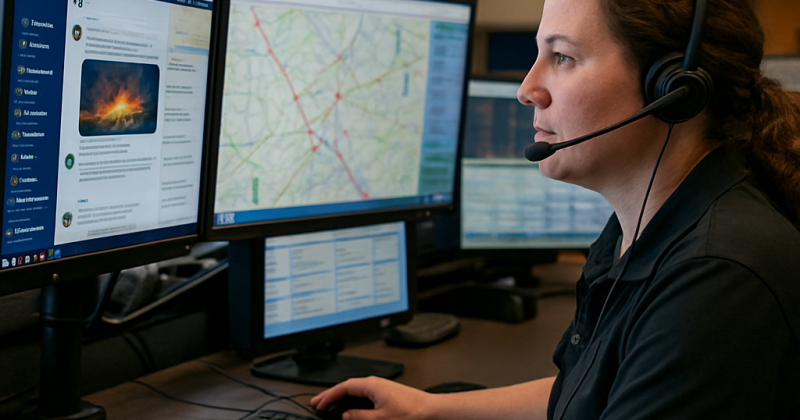
New software platforms like Geofeedia and Dataminr help agencies automatically scan, filter, and prioritize relevant social media posts within a defined geographic area.
Key features include:
- Geo-fencing areas around incidents
- Filtering posts by urgency indicators (e.g., keywords like “explosion” or “fire”)
- Alerting dispatch teams when critical patterns emerge
Challenges and Considerations
Information Overload
Dispatchers already juggle enormous volumes of information. Adding social media monitoring could lead to cognitive overload if not carefully managed.
Solutions:
- Assign dedicated personnel to monitor social media
- Train for efficient triage of social data
- Integrate alerts into CAD systems selectively
Verifying Accuracy
Social media is notoriously prone to misinformation, exaggeration, and rumors. Not every post can—or should—be treated as fact.
Strategies for validation:
- Cross-check multiple sources
- Prioritize posts with corroborating media (photos/videos)
- Coordinate with field units for ground truth verification
Privacy and Legal Compliance
Monitoring public social media posts is generally legal, but there are nuances, especially around data storage and user privacy.
Best practices:
- Follow local, state, and federal guidelines
- Create clear policies on social media monitoring and data retention
- Educate dispatchers about ethical boundaries
Real-World Case Studies
- Harris County, Texas: Emergency management incorporated Twitter feeds into their dispatch system during Hurricane Harvey to identify stranded residents in flooded areas.
- New York City Emergency Management: Uses real-time social media monitoring to detect infrastructure failures like blackouts or water main breaks often before official reports.
Integrating Social Media Monitoring Into Dispatch Workflows
Here’s how centers can start:
- Pilot a Program
Start small with dedicated personnel during large events or high-risk periods. - Define Clear Objectives
Identify what types of incidents or intelligence you’re trying to capture. - Choose the Right Tools
Invest in platforms designed for public safety, not just commercial social listening tools. - Train Your Team
Provide dispatcher training on interpreting social media posts critically and efficiently. - Document and Review
Track successes, failures, and lessons learned for continuous improvement.
Conclusion
Social media monitoring isn’t about replacing traditional dispatch workflows—it’s about enhancing them. When properly implemented, it can give dispatchers an edge: faster intel, better decision-making, and ultimately, stronger community outcomes.
As the emergency landscape continues to evolve, leveraging all available sources of information—including what’s happening on social media—could make all the difference.
Want to stay ahead of technology trends in dispatch?
👉 Subscribe to The Alarm Room Newsletter for more tips and tools!