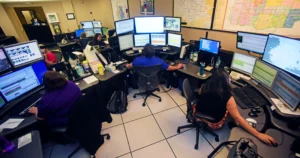
In the fast-paced world of public safety, dispatchers are often the unseen lifeline—keeping calm under pressure, coordinating emergency responses, and bearing the emotional weight of every call. But what happens when it’s a dispatcher who’s in crisis? Picture a shift where a team member freezes up after handling back-to-back traumatic incidents. There’s silence, awkward glances, and then, business as usual. No one knows what to say. No one wants to say the wrong thing. So, nothing gets said at all.
This scenario isn’t rare. Despite working in high-stress environments, many dispatchers receive little to no formal training in how to recognize and respond to mental health issues in their peers. That’s where Mental Health First Aid (MHFA) comes in. By providing actionable tools and frameworks, MHFA training empowers dispatchers to identify early warning signs, offer immediate support, and guide colleagues toward professional help when needed. For leaders and supervisors, investing in MHFA builds a culture of psychological safety that directly impacts team performance and retention.
In this article, we’ll explore the core components of MHFA for public safety professionals, how it complements existing emergency response protocols, and how it strengthens leadership from the console outward. You’ll walk away with practical strategies to implement in your center—starting today.
Why Mental Health First Aid Matters in Dispatch Centers
Dispatchers operate at the intersection of urgency and unpredictability. The cognitive demands of multi-tasking, constant vigilance, and managing high-stakes situations make them uniquely susceptible to burnout, vicarious trauma, and post-traumatic stress.
Mental Health First Aid (MHFA) is a skills-based training program developed by the National Council for Mental Wellbeing. It’s designed to teach participants how to recognize and respond to signs of mental illness, substance use challenges, and emotional distress in others.
Key benefits of MHFA training in dispatch settings:
-
- Reduces stigma by normalizing conversations about mental health
-
- Equips dispatchers with tools to support each other during and after critical incidents
-
- Strengthens leadership through improved interpersonal communication
-
- Enhances retention by fostering a supportive workplace culture
This training doesn’t turn dispatchers into therapists. Instead, it gives them the language and confidence to act as the first line of support when a colleague is struggling.
Recognizing the Warning Signs
Unlike physical injuries, mental health challenges often manifest subtly—or not at all. In close-knit communication centers, where “pushing through” is the cultural norm, early signs are easy to overlook.
Common behavioral red flags include:
-
- Increased irritability or withdrawal
-
- Sudden changes in performance or attendance
-
- Excessive fatigue despite adequate rest
-
- Emotional outbursts or flat affect
MHFA teaches dispatchers to look for patterns, not isolated events. For example, a usually upbeat dispatcher who becomes increasingly detached over the course of a week may be experiencing the early stages of burnout or depression.
This level of high-stakes decision-making reflects patterns discussed in “The Impact of High-Stress Calls on Dispatcher Mental Health.” Recognizing these signs early can prevent long-term consequences for both individuals and the team.
The ALGEE Framework: A Practical Guide
At the heart of MHFA is the ALGEE action plan. This five-step approach provides a structured yet flexible process for supporting someone in distress:
-
- Approach, assess for risk of harm
-
- Listen nonjudgmentally
-
- Give reassurance and information
-
- Encourage appropriate professional help
-
- Encourage self-help and other support strategies
Here’s how ALGEE might look in a dispatch context:
-
- You notice your coworker, Sam, has been unusually quiet and missed two briefings this week.
-
- You approach them privately during a break and ask how they’re doing.
-
- You listen without interrupting or minimizing their concerns.
-
- You reassure them that seeking help is a strength, not a weakness.
-
- You encourage them to talk with your agency’s peer support team or EAP.
-
- You follow up the next shift, offering to help them find resources or take a break if needed.
The simplicity of ALGEE makes it a powerful, repeatable tool that any dispatcher can use, regardless of rank or experience.
Integrating MHFA into Emergency Communication Culture
Implementing MHFA effectively goes beyond one-time training. It requires leadership buy-in, policy alignment, and ongoing reinforcement.
Strategies for successful integration include:
-
- Make training part of onboarding for new hires
-
- Pair MHFA with crisis debrief protocols to address emotional needs alongside operational reviews
-
- Appoint MHFA champions within the team to model supportive behavior
-
- Collaborate with HR and EAP providers to ensure resource accessibility
Dispatch supervisors and directors can lead by example, using MHFA techniques during shift changes, performance check-ins, and post-incident reviews. Doing so not only strengthens individual well-being but creates a ripple effect that enhances overall team resilience.
Building a Culture of Peer Support
A dispatch center’s culture shapes how mental health is perceived and addressed. Creating an environment where it’s okay to say, “I’m not okay,” begins with modeling vulnerability and support at every level.
Key practices to build this culture include:
-
- Recognizing acts of peer support as leadership
-
- Encouraging open dialogue during shift briefings
-
- Providing anonymous suggestion boxes for mental health resources
-
- Hosting quarterly wellness workshops
Ultimately, MHFA isn’t just a training—it’s a mindset shift. It repositions dispatchers as leaders in psychological safety, not just emergency response. That shift can transform a center from high-functioning to high-caring.
Conclusion: Dispatchers as First Responders in Mental Health
Dispatchers are already trained to handle the worst day of someone else’s life. With Mental Health First Aid, they can learn to support their own team during their darkest hours too. By recognizing early signs, responding with empathy, and encouraging help-seeking behavior, dispatchers become not only protectors of the public but also guardians of each other.
Agencies that invest in MHFA create stronger teams, reduce burnout, and elevate morale. It’s time to see mental health support as mission-critical.
Start the conversation today. Ask your supervisor about bringing MHFA to your center or download our free resource bundle to take the first step.