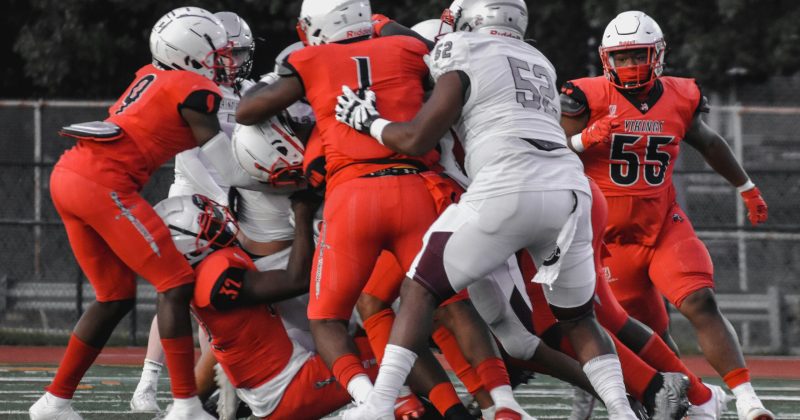
In the film Remember the Titans, coaches faced a team divided by mistrust and uncertainty. Their job wasn’t just to teach plays—it was to build unity, instill confidence, and prove that success only comes when teammates believe in one another.
That same lesson applies inside a dispatch center. Dispatcher training isn’t just about protocols and checklists. It’s about communication confidence—the ability to trust your voice, your judgment, and your team when everything is on the line. For dispatchers, this confidence fuels clear calls, decisive action, and unshakable teamwork.
When new dispatchers step into training, they often feel like rookies on the field—overwhelmed, unsure, and afraid of making a mistake. Leaders and trainers, like coaches, have the chance to turn that uncertainty into trust, building a foundation that carries through every shift and every call.
Training Beyond Skills: Building Unity in the Console
When coaches of the Titans brought divided players together, they didn’t just run drills. They demanded trust across barriers. In dispatch training, the same principle applies. Skills are important, but without unity, a center fractures under pressure.
New hires need a culture that fosters communication confidence, where questions aren’t punished but welcomed.
Supervisors must model calm, steady tones even during chaotic calls—showing that confidence is contagious.
Trainers must focus on more than policies; they must show how trust between partners strengthens the response.
Why Dispatcher Communication Confidence Matters
Dispatcher communication confidence isn’t about ego. It’s about clarity, precision, and trustworthiness in the moments where hesitation costs time.
For new dispatchers: Confidence builds resilience against early self-doubt.
For veteran teams: Confidence reduces errors and creates space for rapid decision-making.
For leadership: Confident communication spreads downward, setting a tone of professionalism.
According to NENA training guidelines, effective communication under pressure is one of the most critical dispatcher competencies.
Training Lessons from the Titans
Just as Coach Boone demanded excellence from his players, dispatch trainers must set high but realistic standards. Here’s how:
Start with small wins. Celebrate each milestone in training to reinforce progress. (Celebrating Milestones in Training: Motivation Through Recognition)
Pair rookies with veterans. Just as the Titans learned from one another, mentorship fosters growth and confidence. (What Makes a Good CTO? Traits of Top Dispatcher Trainers)
Encourage vulnerability. A dispatcher who admits uncertainty is already halfway to learning.
Simulate pressure. Use scenario-based training to mimic high-stakes calls, ensuring confidence holds under stress.
Reinforce unity. Remind dispatchers that they’re never alone—every call is a team effort.
Real-World Case Study: Dispatcher Confidence in Action
During the 2018 Camp Fire in California, dispatchers faced overwhelming call volume and rapidly changing conditions. Reports from APCO highlight how communication confidence made the difference between panic and precision. Those with strong training not only gave clear instructions but also maintained trust with field responders, helping coordinate one of the most complex evacuations in recent memory.
This case underscores a truth: when confidence falters, chaos spreads. When confidence holds, the team succeeds.
Coaching the Dispatch Team: Best Practices
Like the Titans’ coaches, dispatch leaders can instill unity by:
Holding regular team huddles: Quick pre-shift meetings reinforce trust and priorities.
Creating feedback loops: Encourage constructive critique without blame.
Modeling behavior: Leaders who communicate confidently set the standard.
Providing ongoing training: Confidence isn’t a one-time skill; it’s sustained through practice. (Retention Through Training: How Continued Learning Builds Loyalty)
Conclusion
In Remember the Titans, victory didn’t come from talent alone—it came from trust. Players found confidence in themselves and in one another, and that unity turned them into champions.
In dispatch, the same is true. Dispatcher communication confidence isn’t just about handling calls—it’s about building trust across the console, across the shift, and across the community you serve.
Like the Titans, your team succeeds when trust beats division. Train for skills, yes—but train harder for unity. That’s where lasting success lives.
👉 Ready to build stronger training programs? Subscribe to The Weekly Alarm and get actionable resources for your dispatch team.