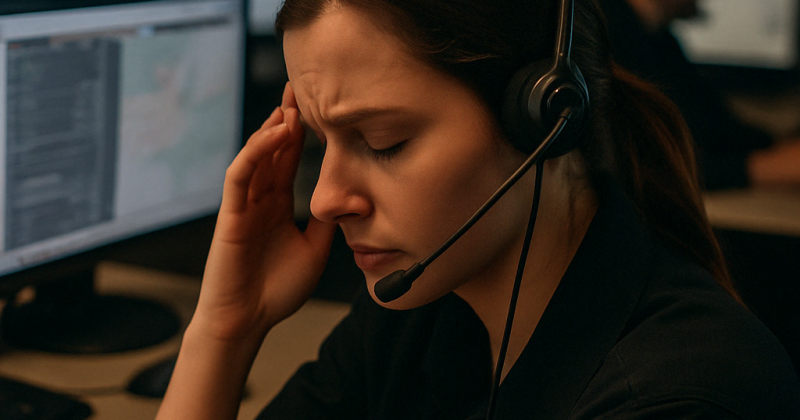
In emergency communications, there’s no shortage of critical incidents—but some of the most profound crises happen behind the headset. Dispatchers are often the unseen lifeline in moments of chaos, expected to stay calm, composed, and in control. But what happens when the crisis isn’t on the other end of the line, but within your own team?
Mental health struggles can affect anyone, regardless of tenure or title. In the dispatch center, the pace is unrelenting, and the pressure is high. When a coworker begins showing signs of emotional distress, it’s easy to miss—or dismiss—the signs in the rush of daily operations. But ignoring the warning signals can have serious consequences for the individual, the team, and ultimately, public safety.
This article provides practical strategies for recognizing when a teammate may be struggling, how to support them compassionately and appropriately, and how supervisors and peers alike can foster a culture where no one suffers in silence.
Recognizing the Signs: It Starts with Awareness
Mental health challenges don’t always announce themselves. Often, the signs are subtle, cumulative, and easy to overlook—especially in a dispatch center where stress is normalized.
Common behavioral indicators may include:
- Sudden withdrawal or isolation from teammates
- A noticeable drop in performance or attention to detail
- Increased irritability, emotional outbursts, or mood swings
- Frequent absenteeism or tardiness
- Verbal cues such as hopelessness, fatigue, or expressions of being overwhelmed
Reference: NENA’s Guide to Wellness Programs
It’s important to approach these signs with care—not as a diagnostic checklist, but as potential red flags that warrant a closer look.
🔗 See also: The Impact of High-Stress Calls on Dispatcher Mental Health: Coping Strategies
Opening the Door: How to Approach a Struggling Coworker
Talking to someone about their mental health can feel intimidating, especially in a high-stakes, high-speed environment. But the goal isn’t to fix the problem—it’s to show you care.
Key tips for approaching a teammate:
- Choose the right moment: Avoid busy call times. Seek a quiet, private moment.
- Be direct but gentle: “Hey, I’ve noticed you haven’t seemed like yourself lately. Is everything okay?”
- Avoid judgment or assumptions: This is about listening, not labeling.
- Respect their boundaries: Some may not be ready to open up, and that’s okay.
Even if your coworker declines to talk, your outreach matters. It can plant the seed for future trust.
Peer Support in Action: Building a Culture of Compassion
Peer support doesn’t require clinical credentials—it requires humanity. Building a resilient team means normalizing mental health conversations and reducing the stigma.
Agencies can foster a culture of support by:
- Incorporating peer-support training into continuing education
- Creating designated wellness coordinators or peer advocates
- Posting mental health resources prominently in the center
- Encouraging leaders to model vulnerability and self-care
According to APCO, dispatchers who feel supported by their peers are more likely to report positive coping strategies and job satisfaction.
🔗 See also: The Role of Leadership in Promoting Mental Health Among Dispatch Teams
When You’re the Supervisor: Leadership’s Role in Support
For dispatch supervisors and CTOs, your influence is critical. You set the tone for what’s acceptable and what gets ignored.
Ways supervisors can lead with empathy:
- Know the signs of compassion fatigue and burnout
- Ensure your EAP (Employee Assistance Program) is accessible and visible
- Conduct regular one-on-ones that allow room for emotional check-ins
- Advocate for schedule flexibility and adequate time off when needed
Leadership doesn’t mean solving every personal issue—it means creating a safe space where help is possible and supported.
Real-World Spotlight: Tulsa’s Peer Support Triumph
After experiencing back-to-back traumatic incidents in 2022, the Tulsa Police Department Communications Center launched a dedicated peer support program. Trained dispatchers were available on-site, and participation in wellness check-ins increased by 41% in the first year.
This proactive investment not only improved morale but reduced sick time attributed to stress-related conditions. Agencies across the U.S. have since contacted Tulsa for program replication.
Conclusion: One Conversation Can Change Everything
Dispatchers are trained to respond to emergencies—but sometimes, the crisis is sitting beside them.
Supporting a struggling teammate isn’t about having the right words—it’s about showing up, listening, and creating an environment where no one feels alone in their fight. Peer support saves careers. In some cases, it may save a life.
Let this be your reminder: You are not just coworkers. You’re a lifeline to each other, too.