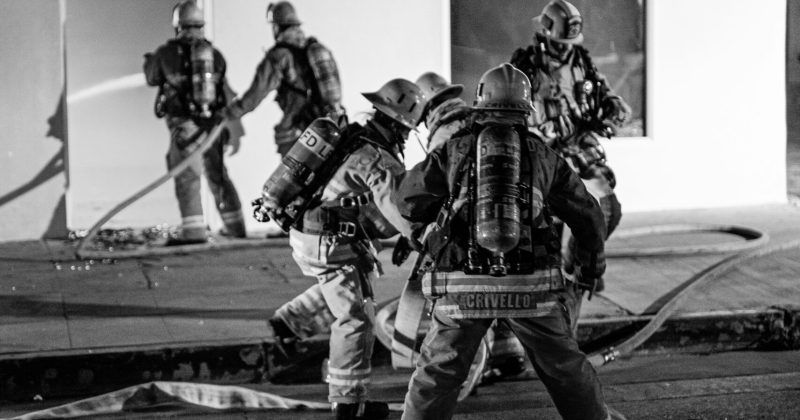
Imagine this: a dispatcher accurately relays critical information during a fast-moving structure fire, only to find that their recommendations are disregarded once crews arrive on scene. Later, in the post-incident debrief, their role is barely acknowledged. This scenario is all too familiar for many in public safety communications.
Dispatchers play a crucial role in emergency response, but their expertise is often undervalued or misunderstood by field personnel. This disconnect not only impacts morale but can also compromise incident outcomes. Bridging the gap between dispatch and field operations is not just a matter of mutual respect—it’s a matter of operational effectiveness.
This article outlines practical strategies to build trust and improve collaboration between dispatchers and field responders. Drawing from standards by APCO, NENA, and FEMA, we’ll explore how to strengthen working relationships, boost morale, and enhance performance across all levels of incident response.
The Dispatcher’s Role in Incident Command
Understanding Our Place in ICS
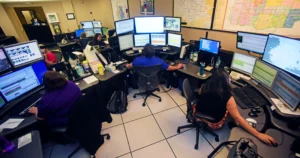
Dispatchers are often the first point of contact and the steady voice guiding responders into rapidly evolving situations. Within the Incident Command System (ICS), their situational awareness, multitasking skills, and ability to coordinate resources are indispensable.
Yet despite these contributions, dispatchers are frequently excluded from ICS planning and decision-making. Recognizing dispatch as an operational asset in the ICS framework means:
- Including dispatch supervisors in pre-incident planning
- Involving communications personnel in after-action reviews
- Educating field teams about dispatcher capabilities and constraints
This integration reflects patterns discussed in “The Role of Fire Dispatchers in Incident Command Systems: A Leadership Perspective.”
Barriers to Trust and How to Overcome Them
Common Challenges
- Lack of mutual understanding: Dispatchers often feel field units don’t grasp the pace and pressure of the comm center, while field teams may see dispatch as disconnected from the reality on the ground.
- Communication gaps: Miscommunication, tone, or unclear information can erode trust quickly.
- Limited cross-training opportunities: Without firsthand experience in each other’s environments, empathy and insight remain limited.
Solutions That Work
- Ride-along and sit-along programs
- Encourage field responders to observe in the comm center
- Offer dispatchers opportunities to shadow crews in the field
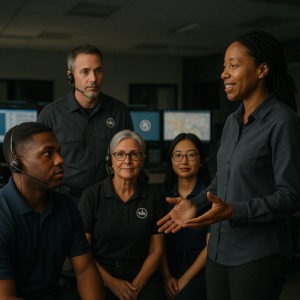
- Joint debriefs after major incidents
- Normalize two-way feedback
- Highlight positive outcomes facilitated by dispatch
- Scenario-based ICS training involving both teams
- Reinforces shared goals and decision-making under pressure
Building Stronger Communication Channels
Shared Language and Clarity
Using consistent language, codes, and confirmation protocols fosters smoother exchanges. Training on the use of plain language during major incidents can reduce confusion across agencies.
Pro tip: Always confirm receipt of critical information. A simple “copy” or “message received” can go a long way in high-stakes situations.
Tools That Help
- CAD integrations: Real-time updates can reduce radio traffic and increase situational clarity
- Communication SOPs: Standard Operating Procedures that define contact points, escalation paths, and mutual responsibilities
Best Practices for Fostering Mutual Respect
Cultural Shifts in the Agency
Promoting a team-oriented mindset starts at the leadership level.
- Recognize dispatch contributions in public and internal commendations
- Involve dispatch in departmental trainings and drills
- Celebrate wins that showcase inter-team collaboration
Dispatcher-Led Initiatives
Empower dispatchers to initiate relationship-building efforts:
- Host briefings to explain dispatch tools and limitations
- Offer feedback to field crews constructively, through appropriate channels
- Request inclusion in training exercises to provide realistic scenarios
Implementing ICS-Based Frameworks for Better Collaboration
Example: Unified Command in Action
During multi-agency responses, dispatchers who understand the chain of command and resource allocation can better anticipate needs. Likewise, field personnel who include dispatch in the loop allow for faster support and accurate updates.
Framework tip: Use FEMA’s ICS-100 and ICS-200 training to align terminology and expectations across teams.
Conclusion
Dispatchers are not just voices on the other end of the radio—they are integral members of the response team. Recognizing their leadership role within ICS and investing in collaborative practices can enhance agency performance and employee satisfaction.
When field and dispatch teams trust each other, the result is more than operational efficiency—it’s safer communities, smoother responses, and stronger morale.
Take action today: Encourage your agency to implement joint trainings, share this article with your leadership team, and start conversations about how dispatch can be better integrated into field operations.