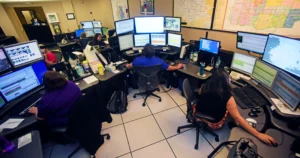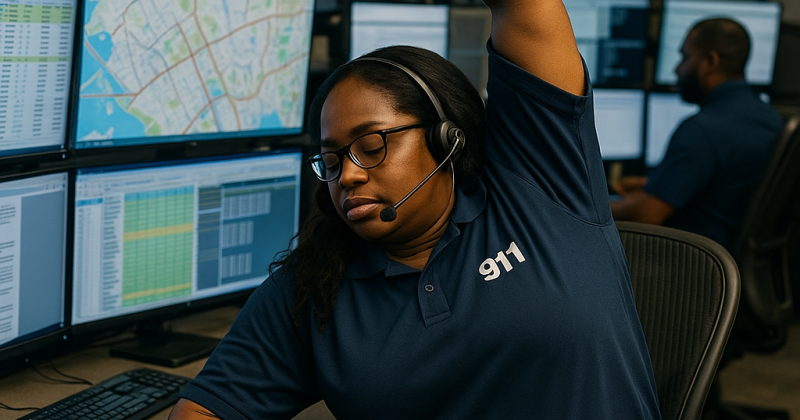
Emergency communications centers operate around the clock, demanding focused attention, split-second decisions, and long hours spent seated. Dispatchers shoulder immense responsibility, yet their work environment often restricts movement—both physically and emotionally. The nature of the job is, by design, sedentary.
But here’s the truth: our bodies and minds were not meant to sit still for 10+ hour shifts. And when stress, trauma, and fatigue stack up, lack of movement quietly fuels the mental toll.
Physical activity—even just a few minutes at a time—has been repeatedly proven to boost mood, reduce stress hormones, and sharpen focus. This post unpacks how small, intentional movement strategies can have a lasting impact on the mental health of public safety professionals—and how to integrate them into the workday without disrupting operational flow.
Why Dispatchers Are Uniquely Affected by Sedentary Stress
- Extended Seated Hours: Many dispatchers remain at their consoles for 8 to 12 hours, often with minimal breaks.
- High-Stakes Environment: Unlike many desk jobs, dispatch work is reactive, stressful, and emotionally intense.
- Compounded Physical Strain: Tension, posture fatigue, and shallow breathing are common.
- Limited Control Over Schedule: Breaks and shifts are dictated by call volume, not by the dispatcher’s preference.
🔗 Related Post: The Impact of Shift Work on Mental Health: Coping Mechanisms for Dispatchers
The Mental Health Benefits of Physical Movement
- Stress Reduction Through Movement
- Releases endorphins—natural mood lifters.
- Decreases cortisol, the body’s stress hormone.
- Increases circulation and oxygen to the brain.
- Improves Emotional Regulation
- Regular movement helps stabilize mood and reduces emotional reactivity.
- Incorporating mindful movement (like deep breathing paired with stretching) can act as a reset after high-intensity calls.
- Boosts Focus and Alertness
- Even short bursts of movement re-energize mental clarity.
- Prevents the mental “fog” that often creeps in mid-shift.
Practical Movement Routines That Fit the Console Life
Stretch Breaks (1–2 Minutes)
- Shoulder rolls
- Neck rotations
- Wrist circles
- Seated hamstring stretches
Standing Micro-Bursts (2–3 Minutes)
- March in place during non-emergency moments
- Wall push-ups
- Heel raises behind the chair
Tension Release Strategies
- Squeeze and release fists 3–5x
- Deep diaphragmatic breathing while rolling shoulders
- Gentle back twists (seated)
Bonus: Desk Equipment Can Help
- Use a foot roller under the console
- Add a posture cushion or lumbar roll
- Use a small under-desk elliptical if space and policy allow
Getting Buy-In from Your Team or Supervisor
- Frame it as wellness, not weakness. Movement supports resilience.
- Cite performance benefits. A refreshed dispatcher is a more alert one.
- Propose team-wide microbreaks. Start with a daily “2-minute reset.”
🔗 Related Post: Crisis Within the Crisis: Supporting a Teammate Through Mental Health Struggles
Agency Spotlight: Vancouver Fire Dispatch Center
In 2023, Vancouver Fire integrated hourly stretch reminders and group movement breaks during low-call periods. Dispatchers reported reduced tension headaches, improved morale, and increased focus after just two weeks. The initiative was low-cost—and high-impact.
Conclusion:
The demands of public safety dispatching aren’t going anywhere—but the strategies we use to care for ourselves can (and must) evolve. Physical movement doesn’t have to be disruptive. In fact, it can be one of the most effective tools we have to reset mentally and emotionally during a shift.
Start small. Pick one movement from this list and make it a habit. Share the idea with a teammate. And remember, prioritizing your wellness isn’t selfish—it’s strategic.
➡️ Subscribe to The Alarm Room for more practical wellness tips that fit the real-life challenges of dispatch.